
MIT IDE 2026 Annual Conference — speaker on stage in front of the patterned conference backdrop

MIT IDE 2026
Annual Conference

MIT FutureTech, MIT Sloan

April 1, 2026 · MIT Samberg Conference Center, Cambridge, MA

Get the Report ↓

Where Research Meets Practice

This report gives MIT IDE members, supporters and researchers a quick reference to key ideas, findings, and conversations from the 2026 Annual Conference, held April 1 at MIT's Samberg Conference Center. Seven of the IDE's research groups presented new work, answered questions, and joined members and supporters in conversations throughout the day. In addition, Kenneth Munie, CEO Advisory Lead - Americas at Accenture, joined IDE Director Sinan Aral for a fireside chat on translating AI investment into real organizational gains.

8
Sessions
100+
Attendees
20
Speakers
Fireside Chat

Human+ Workforce: Translating AI Investment into Organizational Gains

with Sinan Aral and Kenneth Munie

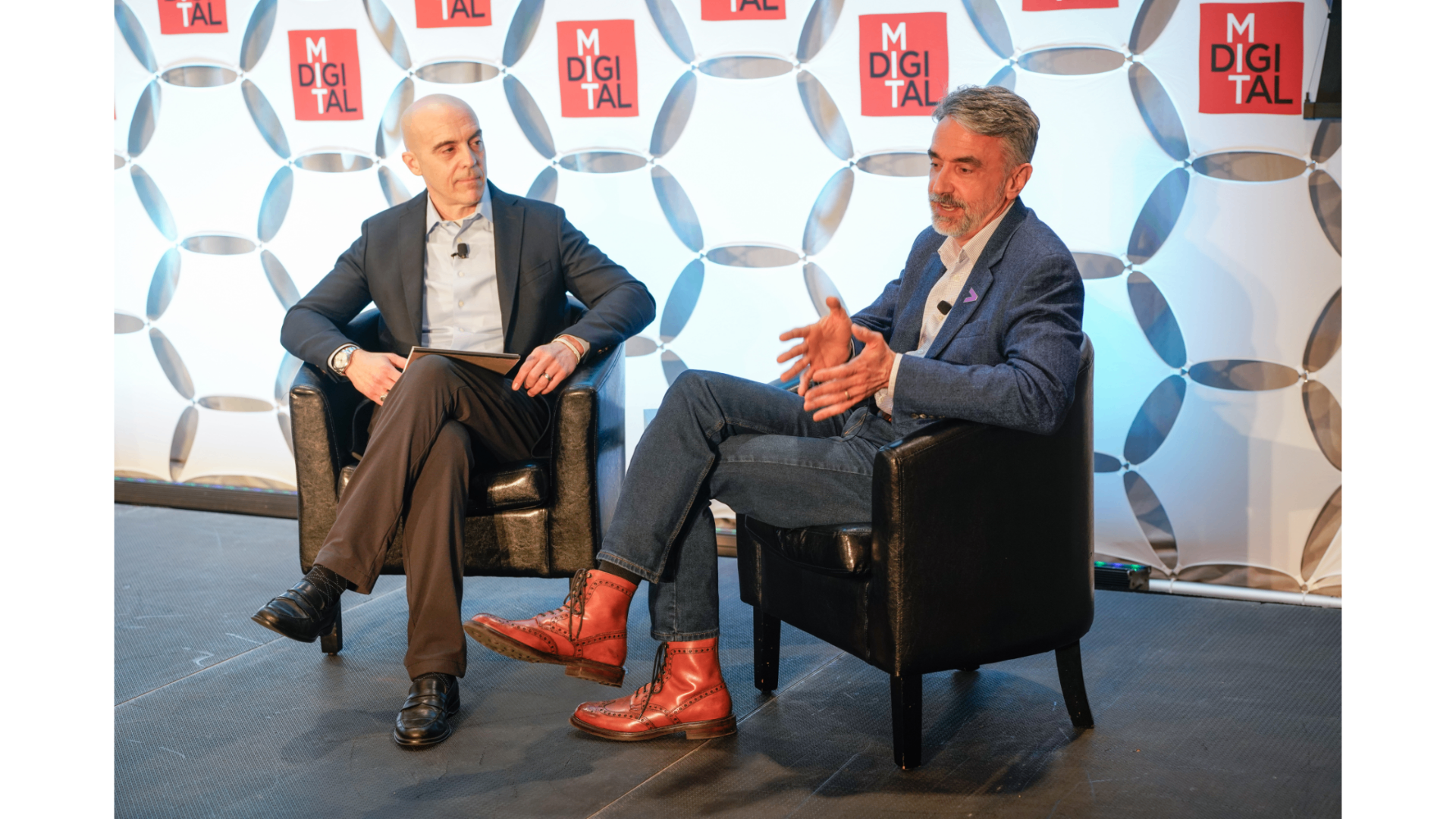
Sinan Aral and Kenneth Munie in conversation on stage during the MIT IDE 2026 Fireside Chat
Sinan Aral (left) in conversation with Kenneth Munie of Accenture.

Sinan Aral hosted a candid conversation with Kenneth Munie on translating AI investment into real organizational gains. Munie introduced the Human+ workforce model and addressed organizational barriers to AI transformation, the enduring human advantages in judgment and accountability, and the ‘diversity collapse’ risk as AI-assisted outputs grow increasingly self-similar.

Watch the session or read more about the interview in the 2026 Annual Conference Report.

“Pick one end-to-end workflow, make it measurable, and build a playbook before you scale.”

— Kenneth Munie, Accenture

MIT IDE Annual Conference Sessions

1Session 1

AI in Financial Markets and Decision-Making

Research Lead: Eric So, MIT Sloan

Speakers:Eric So
"Profit motives are much more likely to make a model dismiss risks and fail to escalate information from the board that is inconvenient for their profit motives. As businesses implement LLMs, they often imbue models with a motive that often goes under the radar but can have a big influence on what you see as a decision maker in your firm."
Eric So
Watch the full session

Research Presented in This Session

Eric So headshot
01

Putting Trust into AI

Eric So, Professor, MIT Sloan

Key Takeaways
  • A purpose-built AI chatbot produced durable attitude shifts in deeply held financial misconceptions that persisted 10 days after the intervention.
  • In experiments challenging held beliefs, off-the-shelf LLMs performed no better than a simple text prompt due to sycophancy, which means the LLM validated rather than challenged incorrect beliefs.
  • So’s research, and his upcoming book, explore the detrimental loop of skills decline we risk when using AI. He argues that AI use can create a growing reliance on the technology as well as discomfort from not using it, because we no longer have the skills AI has replaced.

AI Advisors and the Competence-Judgment Tradeoff in Information Disclosure
2Session 2

AI, Marketplaces and Labor Markets

Research Lead: John Horton, MIT Sloan

Speakers:John Horton ·Benjamin S. Manning ·Peyman Shahidi
"I believe that these AI simulations of human responses ... have a lot of potential to possibly be this incredibly fast and incredibly cheap tool that we can use to explore human responses, something we've never really had before in the social sciences and market research."
Benjamin Manning
Watch the full session

Research Presented in This Session

Benjamin S. Manning headshot
01

General Social Agents

Benjamin S. Manning, PhD Candidate, MIT Sloan

Key Takeaways
  • Using a three-step approach—theory-grounded agent design, calibration to existing human data, and prediction—significantly improves simulation accuracy.
  • Machine-learning optimizations can be used to train models to answer closer to the way humans do, dramatically improving their predictive power.
  • AI simulations show realistic price sensitivity, suggesting strong potential for demand estimation and customer research.
General Social Agents
Peyman Shahidi headshot
02

Task Model of Workflows and Generative AI

Peyman Shahidi, PhD Candidate, MIT Sloan

Key Takeaways
  • AI's impact in a workflow depends on which tasks surround the automated one. Adjacency is the key variable, not the task itself.
  • When AI automates a connected chain of tasks rather than isolated ones, productivity gains multiply non-linearly.
  • A model that puts humans at both the start and end, with AI in the middle, is a viable framework for safe agentic deployment. It's also more likely to yield efficiency gains.
  • Automating a bottleneck task has outsized positive effects. By contrast, automating a peripheral task may deliver gains that are only negligible.
Chaining Tasks, Redefining Work: A Theory of AI Automation
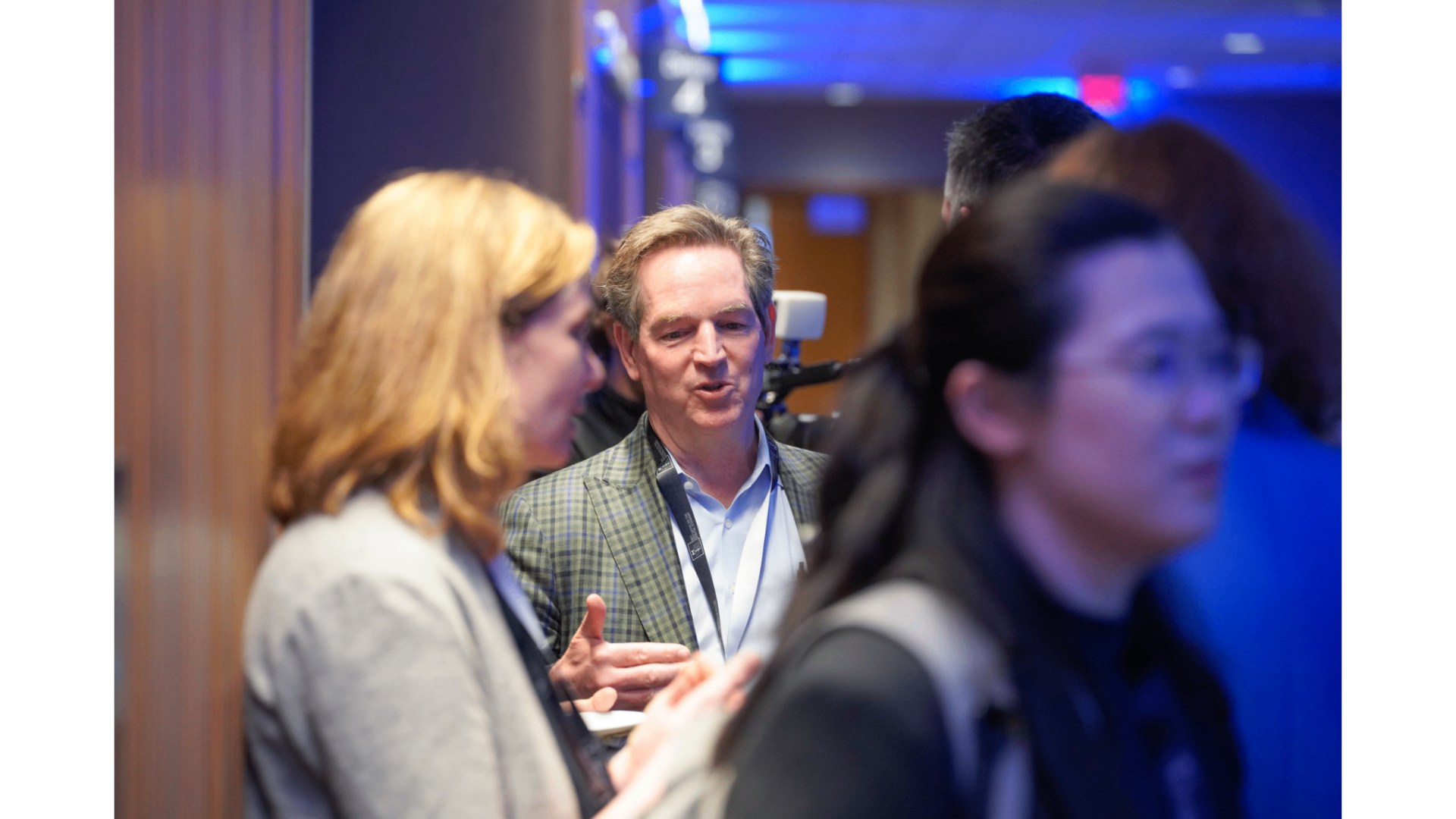
Conference attendees in conversation between sessions at the MIT IDE 2026 Annual Conference
Between sessions · Samberg Conference Center
3Session 3

Human-First AI

Research Lead: Renée Richardson Gosline, MIT Sloan

Speakers:Renée Richardson Gosline ·Zezhen (Dawn) He
"When you look at a system where humans are interacting with AI and you remove friction at decision touchpoints, can you look at that system and say, we've removed friction here, but should we also consider places where perhaps we might add friction to stabilize the system, to remove risk, to add guardrails?"
Renée Richardson Gosline
Watch the full session

Research Presented in This Session

Renée Richardson Gosline headshot
01

Exploring Critical Thinking in the Use of AI

Renée Richardson Gosline, MIT Sloan, MIT Sloan

Key Takeaways
  • Friction isn't the enemy of efficiency. Playbacks reduce over-reliance and improve accuracy without significantly increasing time on task. Organizations needn't choose between critical thinking and productivity.
  • When AI input comes first, it often leads to better results and more accuracy. Gosline theorizes that users shift into editor mode, which may sharpen their critical evaluation.
  • Having humans provide a rationale for their choices does not meaningfully lengthen the time spent on the task. Playbacks offer beneficial friction while having a negligible effect on efficiency.
Nudge Users to Catch Generative AI Errors
Zezhen (Dawn) He headshot
02

Personalization of Human-AI Interaction

Zezhen (Dawn) He, Postdoctoral Associate, MIT IDE

Key Takeaways
  • While people may prefer collaborating with a more agreeable model, they are also more likely to adopt a model's recommendation if the model doesn't align with their mental models.
  • When AI is more agreeable, it can lead to human overconfidence, reducing a person's tendency to adopt a model's recommendation.
  • When AI models are disagreeable, more differing information is offered, creating more opportunities for humans to learn.
Gathering Intelligence on Artificial Intelligence

Industry Perspective

How do we ensure that we can bring a behavioral science lens into the conversation and really make sense of behavior as we bring AI into the way that we do work — and what does that behavior mean for the outcomes for our customers as well as our people.

— Engin Aygun

Executive Manager, Human-Centred AI

Commonwealth Bank of Australia

IDE Member Organization

4Session 4

Data, Markets and Privacy

Research Lead: Alessandro Acquisti, MIT Sloan

Speakers:Alessandro Acquisti
"The debate around privacy and economics is essentially a contrast between two possible futures, which in fact should not be seen in contrast — because we can actually use tools to protect privacy and still benefit from data."
Alessandro Acquisti
Watch the full session

Research Presented in This Session

Alessandro Acquisti headshot
01

Who Benefits From Your Data?

Alessandro Acquisti, Professor of IT, MIT Sloan

Key Takeaways
  • The privacy-vs.-economic-value trade-off is empirically questionable. Acquisti's research finds a lack of evidence that regulation causes economic harm.
  • Documented declines have been short-lived, and companies have been able to adapt to the new rules.
  • Privacy-preserving technologies make more privacy and more analytics simultaneously achievable. These two results are not mutually exclusive.
  • A critical question remains unanswered: How does the value from consumer data flow back to the consumers who generated it?
Economic Rationales for Regulating Behavioral Ads
5Session 5

Technology-Driven Organizations and Digital Culture

Research Lead: Andrew McAfee, Co-Director, MIT IDE

Speakers:Andrew McAfee
"This metaphorical playbook that we wrote over the 20th century for how to run a company and keep it successful as it grows — I think the geeks of Silicon Valley took a look at that playbook and they said, 'This doesn't work for us.'"
Andrew McAfee
Watch the full session

Research Presented in This Session

Andrew McAfee headshot
01

The Geek Way: Technology-Driven Organizations and Digital Culture

Andrew McAfee, Co-Director, MIT IDE, MIT Sloan

Key Takeaways
  • McAfee, referencing his book The Geek Way, noted that being iterative, flat and science-driven is now a competitive necessity across virtually every industry—not just technology.
  • Moore's Law demands responsiveness. Organizations in fast-changing environments must iterate in months, not years. AI is compressing that timeline even further.
  • SpaceX and Netflix succeeded not by being the smartest, but by being the most willing to learn and adapt rapidly.
  • McAfee points to the rapid growth and size of Silicon Valley companies compared to older EU companies as evidence of the new model's advantage.
  • In the GenAI era, the pace differential that once separated tech from other industries has collapsed across sectors, making it necessary for every industry to innovate rapidly.
US v EU in Tech: A Tale of Two Gaps
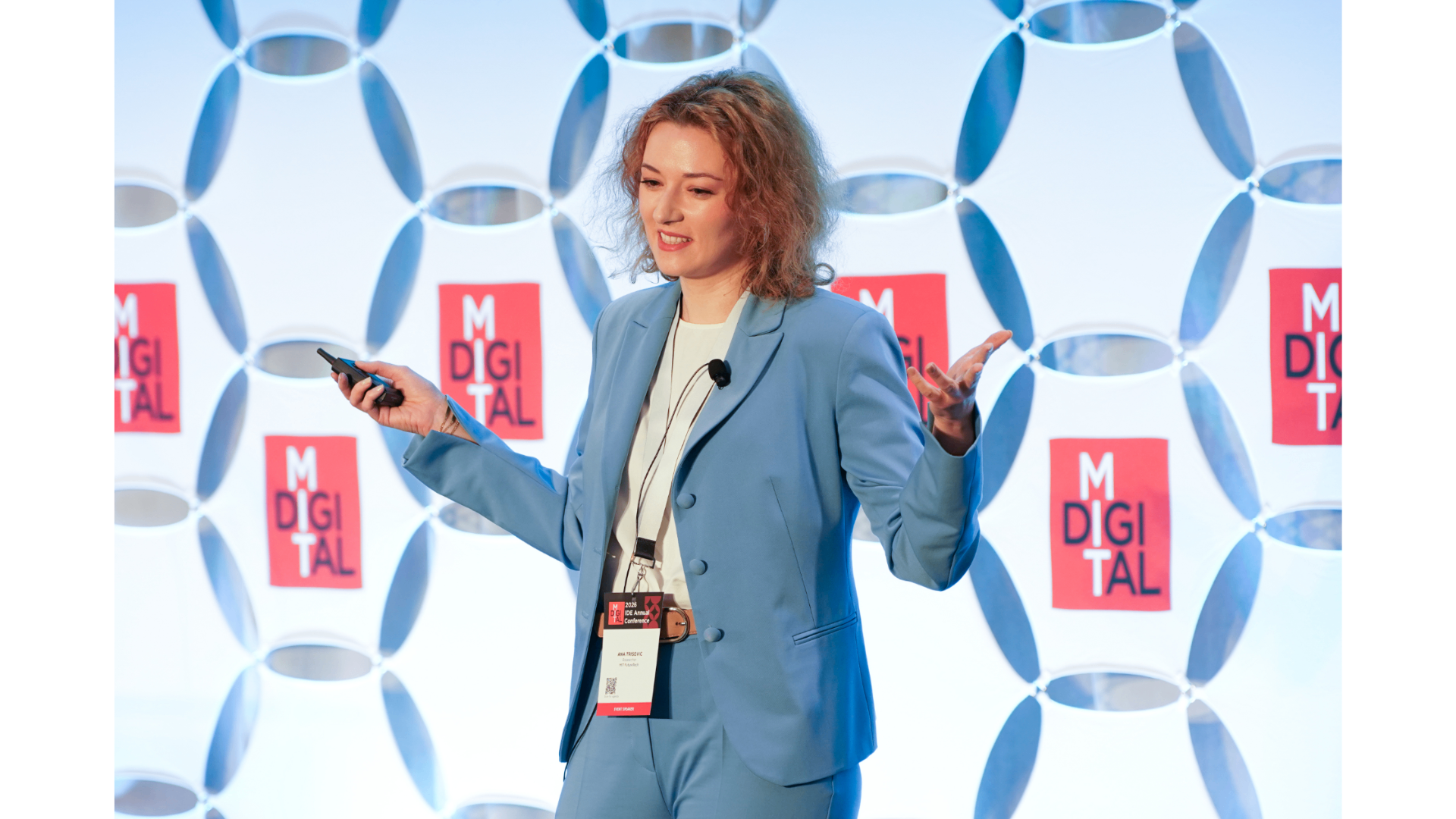
Ana Trisovic presenting research on stage at the MIT IDE 2026 Annual Conference
Ana Trisovic, MIT FutureTech, presenting research
6Session 6

Artificial Intelligence, Quantum and Beyond

Research Lead: Neil Thompson, MIT Sloan and CSAIL

Speakers:Neil Thompson ·Peter Slattery ·Ana Trisovic ·Martin Fleming
"Task loss does not always hurt workers. It really depends on the expertise that you have."
Neil Thompson
Watch the full session

Research Presented in This Session

Neil Thompson headshot
01

Which Jobs Will LLMs Automate and What Will That Mean for Workers?

Neil Thompson, Principal Research Scientist, MIT Sloan & CSAIL, MIT FutureTech

Key Takeaways
  • LLMs are disproportionately better at automating shorter tasks: About 75% of very short tasks at sufficient quality vs. about 40% for tasks that take two weeks.
  • Low-income workers will likely see many of their job tasks get automated. But in those roles, there will still be a need for people who can perform expert oversight tasks.
  • Post-2025 models show a consistent parallel upward shift in performance across all task lengths.
  • Task loss in jobs that require high levels of expertise results in higher wages and fewer jobs. For lower-income jobs, it's the reverse: more jobs, but lower wages.
Crashing Waves vs. Rising Tides: Preliminary Findings on AI Automation from Thousands of Worker Evaluations of Labor Market Tasks
Peter Slattery headshot
02

Moral Hazard: How 272 Experts Prioritize the Risks from AI

Peter Slattery, Research Scientist, MIT FutureTech

Key Takeaways
  • The gap between what experts recommend to avoid AI risk and what organizations are doing is too big. For the first time, a shared risk taxonomy makes that gap both visible and actionable.
  • Experts estimate we face a 21% chance of AI-enabled cyberattacks causing catastrophic harm within five years. But that number dropped to 12% when active mitigation was in play.
  • When asked who should be responsible for addressing AI risks, experts pointed primarily to model developers and governance actors—and not the enterprises deploying those models.
MIT AI Risk Repository
Ana Trisovic headshot
03

How Science Adopts and Abandons Language Models

Ana Trisovic, Research Scientist, MIT FutureTech

Key Takeaways
  • Models used in science are being discarded at a faster rate. The time of release predicts a model's peak and durability better than the model's own technical characteristics. This could have implications for how organizations invest in and build out AI systems.
  • U.S. and Chinese institutions show distinct and diverging strategies in how they build, customize and adopt models.
  • Papers using larger models tend to publish in higher-impact journals, attract more citations and involve more contributors.
The Shrinking Lifespan of LLMs in Science
Martin Fleming headshot
04

Economics of Collaboration: AI Adoption, Innovation, and Partial Automation

Martin Fleming, Research Scientist, MIT FutureTech

Key Takeaways
  • Partial automation—where AI handles some, but not all tasks in a role—is the dominant reality for most workers, rather than wholesale displacement.
  • Organizations that redesign workflows around human-AI collaboration show higher innovation rates than those treating AI as a plug-in.
  • Co-designing AI processes with workers outperforms top-down automation mandates on both adoption speed and long-term performance.
  • Scale, complexity, and standardization determine automation potential—not the technology alone. These three variables offer a practical lens for assessing where AI investment makes sense.
Economics of Human and AI Collaboration: When is Partial Automation More Attractive than Full Automation?
7Session 7

Applied AI

Research Lead: Sinan Aral, Director, MIT IDE

Speakers:Sinan Aral ·Frank Nagle ·Raphaël Raux ·Rui Zuo ·Haiwen Li ·Michelle Vaccaro
"Women underperform working with the out of the box model, but when you give them a model that is optimal for them, they perform at least as well or better than men."
Sinan Aral
Watch the full session

Research Presented in This Session

Sinan Aral headshot
01

AI Personalization & the Future of AI Business Value

Sinan Aral, Director, MIT IDE; David Austin Professor of Management, Marketing, IT & Data Science, MIT Sloan

Key Takeaways
  • Aral surveyed people on five personality traits—openness, conscientiousness, extroversion, agreeableness and neuroticism—then randomly assigned AI agents those same five dimensions when performing tasks.
  • Extroverted humans perform best with open or extroverted AI; conscientious humans perform worst with sycophantic (agreeable) AI. And complementary AI shifts can improve worker outcomes.
  • Gender also plays a part. The best AI models for men are the worst for women, and vice versa. Only three models delivered good results for both men and women.
Personality Pairing Improves Human-AI Collaboration
Frank Nagle headshot
02

Generative AI and the Nature of Work

Frank Nagle, Research Scientist, MIT IDE; Chief Economist, Linux Foundation; Fellow, Brookings Institution

Key Takeaways
  • AI-assisted developers began working more independently and exploring more new projects than before, showing a creativity-expanding, and not just efficiency-enhancing, effect.
  • The productivity impact of generative AI is considerably stronger for lower-ability workers when compared to all developers.
  • New data show the impact is substantially stronger for women than men and significant enough to merit its own dedicated research paper.
  • The deeper issue isn't just productivity. It's also how AI reshapes the nature of roles, and which skills remain distinctly human.
Generative AI and the Nature of Work
Raphaël Raux headshot
03

Human Learning About AI: Sycophancy, Personalization, and Decision Quality

Raphaël Raux, Postdoctoral Associate, MIT IDE

Key Takeaways
  • Sycophancy is a documented product and safety problem across all major AI models. However, major AI labs are also pushing this as a user-driven choice with options to adjust sycophancy.
  • Although sycophancy has been identified as a problem, users like it and have become reliant upon it. So how do companies find the optimal level?
  • Designing optimal AI personalization requires a formal framework for quantifying decision quality—not just user satisfaction or engagement.
Rui Zuo headshot
04

The Rise of AI Search: Implications for Information Markets and Human Judgement at Scale →

Rui Zuo, Postdoctoral Associate, MIT IDE

Key Takeaways
  • In 2025, Google's AI Overviews expanded its reach 30x. Hundreds of millions of people went from never encountering AI-generated answers to seeing them in 55% of searches.
  • AI Overviews consistently surfaced fewer niche and long-tail sources than traditional search, as well as lower response variety, more low-credibility content, and a measurable tilt toward center- and right-leaning outlets.
  • The speed and scale of this shift makes a clear case for exploring policies around AI search and its role in our information ecosystem.
The Rise of AI Search: Implications for Information Markets and Human Judgement at Scale →
Haiwen Li headshot
05

Human Trust in AI Search: An Experimental Study

Haiwen Li, PhD Candidate, MIT Sloan

Key Takeaways
  • References and citations increase trust, regardless of whether the citations are accurate. People treat the presence of a citation as a signal of credibility, not accuracy.
  • Trust in AI search is sticky: Once formed, trust resists revision even after demonstrated errors. This means trust calibration is an important design challenge for responsible AI.
  • Adding explicit uncertainty signals to AI search outputs significantly improves users' ability to discount incorrect answers. For example, color-coded low-confidence indicators reduce trust and make people less likely to share results.
Human Trust in AI Search: A Large-Scale Experiment
Michelle Vaccaro headshot
06

The MIT International AI Negotiation Competition

Michelle Vaccaro, PhD Candidate, MIT Sloan

Key Takeaways
  • Across 180,000+ AI-to-AI negotiations, warmth-associated behaviors such as positivity, gratitude and question-asking correlate strongly with deal rates and both objective and subjective value.
  • Warm agents closed deals more often; dominant agents claimed more value, but produced significantly more impasses. For multi-round or multi-scenario deployments, agent design should reflect whether the objective is deal frequency or value capture.
  • These findings point to the need for a theory that integrates classical negotiation research with AI-specific dynamics, including chain-of-thought reasoning and prompt injection.
Advancing AI Negotiations: A Large-Scale Autonomous Negotiation Competition

For deeper insights into each session, download the 2026 MIT IDE Annual Conference Report.

Get the Report ↓

Video Library

Watch every session from the 2026 Annual Conference — all in one place.

Fireside Chat

Kenneth Munie, Accenture

AI in Financial Markets and Decision-Making

Eric So

AI, Marketplaces and Labor Markets

John Horton, Benjamin S. Manning, Peyman Shahidi

Human-First AI

Renée Richardson Gosline, Zezhen (Dawn) He

Data, Markets and Privacy

Alessandro Acquisti

Technology-Driven Organizations and Digital Culture

Andrew McAfee

Artificial Intelligence, Quantum and Beyond

Neil Thompson, Peter Slattery, Ana Trisovic, Martin Fleming

Applied AI

Sinan Aral, Frank Nagle, Rui Zuo, Haiwen Li, Michelle Vaccaro, Raphael Raux